
Filmmaking Templates and Checklists: How to Use The Filmmaker’s Field Guide


Making a film with limited resources means keeping track of a lot of things yourself.
You’re planning shots. Figuring out locations. Checking camera settings. Making sure you have usable audio. And somewhere in the middle of all that, you’re supposed to direct the film.
Having a few things written down can make your life a lot easier.
That’s why I created The Filmmaker’s Field Guide. It’s a digital toolkit of filmmaking templates, checklists, and visual references you can use while planning, shooting, and finishing your film.
Let me show you how you could put it to work on your next project.
I built Camp Films around helping filmmakers make the most of the gear, people, and locations they have available.
What is The Filmmaker’s Field Guide?
The Field Guide gives you practical resources to pull up when you need them.
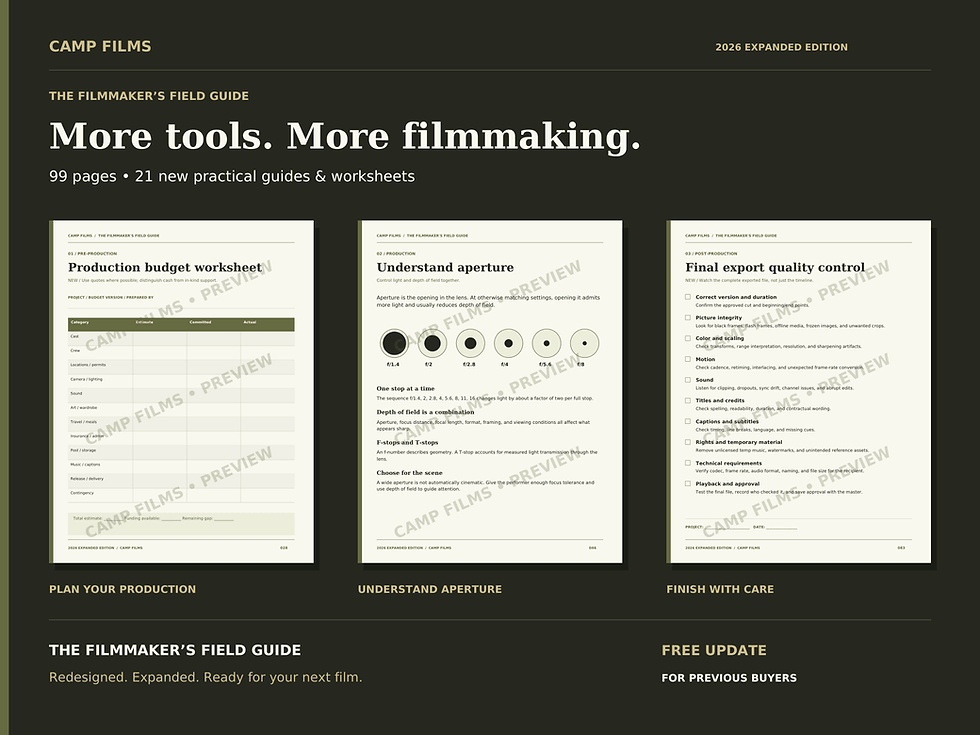
The expanded 3.0 edition includes 99 pages, with resources covering pre-production, production, and post-production. You’ll find planning tools, visual reference sheets, worksheets, and checklists.
Download it, keep it on your phone or tablet, or print the pages you need for a shoot.
The idea is simple: spend less time trying to remember everything and more time making decisions about your film.
1. Work out what your film will actually cost
Let’s say you’re making a short film with two actors, one location, and a weekend to shoot.
You already own a camera. A friend has agreed to help. The location is free.
Sounds pretty manageable.
But what about meals? Gas? A prop you need to buy? Storage for your footage? Music for the finished film?
Small expenses still count.
The production budget worksheet helps you track expected costs, committed spending, and what you actually spend.
The worksheet gives you a place to work through those costs before the shoot.
Start with estimates. Update the committed column when you agree to an expense. Record the actual amount once it’s paid.
For our example short, you might budget for food, travel, a few props, and an extra drive. Seeing those numbers together helps you decide whether the plan fits the money you have.
Maybe you can borrow the prop. Maybe you need to simplify a scene.
Those decisions are easier to make before everyone shows up.
2. Turn your scene into a shot list
A script tells you what happens. A shot list helps you decide how you’re going to show it.
Imagine your scene involves someone arriving home and discovering a letter on the kitchen table.
You could start with:
A wide shot of the character entering.
An insert of the letter.
A close-up of the character reading it.
A reaction shot after they understand what it says.
Now you have something specific to plan around.
The Field Guide includes a shot list template so you can organize your coverage before filming. Think through the framing, movement, equipment, and time each setup needs.
Then look for shots you can capture together.
If the camera is already positioned for the letter insert, get the hand picking it up before moving everything.
That’s a small decision. Over a full shoot, those small decisions add up.
For a more detailed walkthrough, check out my post on how to make a shot list for film.
3. Make visual choices before you’re on set
What shape should your film be?
It’s easy to leave aspect ratio until the edit. But that choice affects how you compose your shots.
The aspect ratio reference shows common frame shapes side by side, from 4:3 through wider formats.
For our kitchen scene, think about what belongs in the frame.
Do you want the character surrounded by empty space? Do you want the composition to feel tight? Will two characters need to share the shot later?
Use the reference to compare shapes, then test your composition with the camera.
A wider frame gives you different possibilities for arranging people and objects. It also changes what you need to watch at the edges.
The point is to make a choice that supports the scene.
Having a visual reference nearby helps you understand your options and explain them to anyone helping you shoot.

4. Give the finished film one more check
Getting to the export feels good. You’ve watched the timeline enough times. You’re ready to upload.
Watch the exported file first.
All of it.
The final export checklist covers picture, sound, titles, captions, technical requirements, and playback.
This checklist gives you a clear way to review the file you’re about to share.
Check for missing media, unwanted frames, audio problems, spelling mistakes, and temporary material that should have been removed.
If you’re delivering the film to someone else, check their requirements too.
For our short, that could mean catching a misspelled actor credit or noticing that a sound effect cuts off early.
You’ve put time into making the film. Give yourself a chance to catch those problems before the audience does.

Who will find this filmmaking toolkit useful?
I made the Field Guide with independent filmmakers in mind.
It’s especially useful if you’re making your first short, working with a small crew, or handling several jobs yourself.
You can choose the pages that fit your project. Start with the budget and shot list. Keep a reference handy during filming. Come back to the finishing tools when you reach the edit.
You don’t have to use every resource on every film.
The benefit is having a place to start when you need structure.

Want help with the full filmmaking process?
If you want practical tools for your next project, get The Filmmaker’s Field Guide here.
If you’d like step-by-step instruction, take a look at No-Budget Filmmaking 101, my
complete beginner filmmaking course. It covers planning, shooting, editing, and releasing your first film. The Field Guide is also included with the course.
You can find more tutorials on the Camp Films YouTube channel, or browse the Camp Films store for more filmmaking resources.
Pick a scene. Write down the shots. Work out what you need to make it happen.
Then go make something.
Happy filmmaking!
Ryan
Comments